Our Fall 2026 Provider Profile highlights the impactful work taking place at the Rhode Island Department of Children, Youth, and Families (DCYF). DCYF plays an important role in promoting family-based mental health promotion and substance misuse prevention. Ellie Robinson, the Project Director for the Children’s Behavioral Health System of Care grant, talks about how Systems of Care frameworks can help improve care access and keep kids connected to their communities.
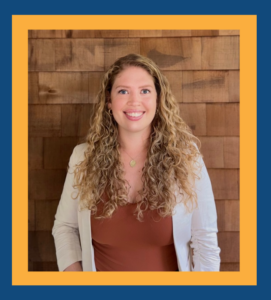 Could you please start by introducing yourself and sharing a bit about your role as a Project Director at the Rhode Island Department of Children, Youth, and Families (DCYF)?
I’m Ellie Robinson, and I’m the Project Director for Rhode Island’s Children’s Behavioral Health System of Care grant at DCYF. Day to day, my work focuses on children’s behavioral health policy and system development: figuring out how the pieces of our system fit together and how to make them work better for children and families.
Before joining DCYF, I spent five years at the Executive Office of Health and Human Services (EOHHS) doing System of Care work, so this is a continuation of something I’ve cared about for a long time. My background spans state government and nonprofit work, and I hold an MPA from Northeastern.
What role does DCYF play in family-based substance misuse prevention?
Much of prevention is about strengthening the things that protect young people: stable, connected families, early support when a child is struggling, and caring adults in their lives. DCYF works with children and families at many points, from child welfare to juvenile justice to children’s behavioral health, so we’re positioned to support families before challenges escalate.
On the behavioral health side, we know that mental health and substance use are closely linked for young people. When a child or teen can get the right support early, in their community and with their family involved, we reduce the risk factors that often lead to substance misuse later on. Our job is to build a system where that early, family-centered help is easy to find and easy to use.
DCYF and the Governor’s office just announced a $12 million grant to support the continued expansion of the Rhode Island Children’s Behavioral Health System of Care. How can Systems of Care frameworks help increase access to behavioral health care?
A System of Care is a framework for organizing services around children and families instead of around agencies or programs. It emphasizes care that’s community-based, family-driven, youth-guided, and culturally responsive, with the goal of keeping kids at home and in their communities whenever possible.
The new four-year, $12 million SAMHSA grant lets us make two big changes that directly improve access. The first is a Single Point of Access, which will give families one clear place to go when they’re looking for behavioral health services, instead of trying to figure out on their own which door to knock on or which phone number to call. The second is Intensive Care Coordination, which uses a wraparound approach to help families with complex needs organize and manage their care across providers, at home and in their community.
The first year is focused on planning and initial implementation, and family voice is central to how we’re designing both pieces.
What current challenges are families and youth in Rhode Island currently facing when accessing care?
The biggest thing we hear from families is that the system is hard to navigate. There are good services in Rhode Island, but families often don’t know where to start, get bounced between providers, or end up on waitlists. That’s especially hard when a family is already in a stressful moment.
Other challenges include workforce shortages, which affect how quickly kids can be seen; gaps in services for youth with more complex needs; and children ending up in emergency departments or out-of-home settings when the right support at home or in the community could have helped. Families also tell us they want to be partners in their child’s care, not just recipients of it. The Single Point of Access and Intensive Care Coordination are designed to address exactly these challenges.
How does DCYF collaborate with other state agencies and outside prevention partners?
Children’s behavioral health doesn’t sit in one agency, so collaboration is essential. We work closely with EOHHS, Medicaid, BHDDH, RIDOH, and RIDE, along with community providers, family and youth advocacy organizations, and evaluation partners.
A good example is our Mobile Response and Stabilization Services (MRSS), which offer families in-home (or community) crisis support for their child. That work is connected to our broader System of Care efforts, and it’s backed by a newly awarded SAMHSA Mobile Crisis Team Partnerships grant. We try to make sure that our grants and initiatives fit together into one system, rather than operating as separate projects.
How can folks get involved in helping to support the prevention work that DCYF does? What advice do you have for people looking to start working or volunteering in prevention?
There are lots of ways in. Families and young people with lived experience are some of our most important partners, so if you’ve navigated the system yourself, your voice is valuable on advisory groups and in public comment opportunities. If you are interested in joining the System of Care Family Engagement Workgroup, reach out here. Community organizations can partner with us as we build out these services.
My advice for people starting out in prevention is to listen first. The best ideas come from the families and young people closest to the challenges. I’d also say don’t worry about having a “perfect” background. Prevention needs people from public health, education, social work, policy, communications, and the community itself. Find a mentor, say yes to opportunities to learn how systems work, and stay curious about why things are the way they are.
Is there any additional information that you would like to share?
I’m committed to ensuring that families know that help is out there and we’re actively working to make it easier to find. If your child is struggling, reach out – you are not alone. Whether you ask for help from your pediatrician, your school, or a community organization, resources are available. And to the prevention community: thank you. The work you do every day is immeasurably important.